It began with a question at the kitchen table
Escape Something is being made by a father and his daughter. Her name is Sara. That sentence is doing more work than it looks like, so let us tell it properly.
Early this year, our daughter’s heart stopped. The resuscitation came late. She survived — she is here, she is home, and she is working every day at her recovery — but she came back with a brain injury. The hardest part is not what you might guess. She can walk, talk, laugh at her father’s bad jokes. What the injury took, mostly, is initiative — the small spark that proposes things. Ask her to choose, and choosing is the hard part. She can do almost anything. What’s difficult is deciding what.
Our family, together with her therapists, keeps inventing doorways into that — small, real projects that ask her brain to reach. One evening the question was:
“Shall we make a game together?”
“Sure!”
“What should it be about?”
“Doesn’t matter.”
“It can’t not matter. It has to be about something.”
“Okay — escaping, then.”
“Escaping what?”
“Something.”
So that’s the game. Escape Something. Sara named it before either of us understood what she had named. A game about fleeing something you cannot identify — imagined by someone who is escaping something she cannot quite name either, one day at a time. We didn’t design that parallel. She handed it to us, the way she hands us most of the good ideas: sideways, and without ceremony.
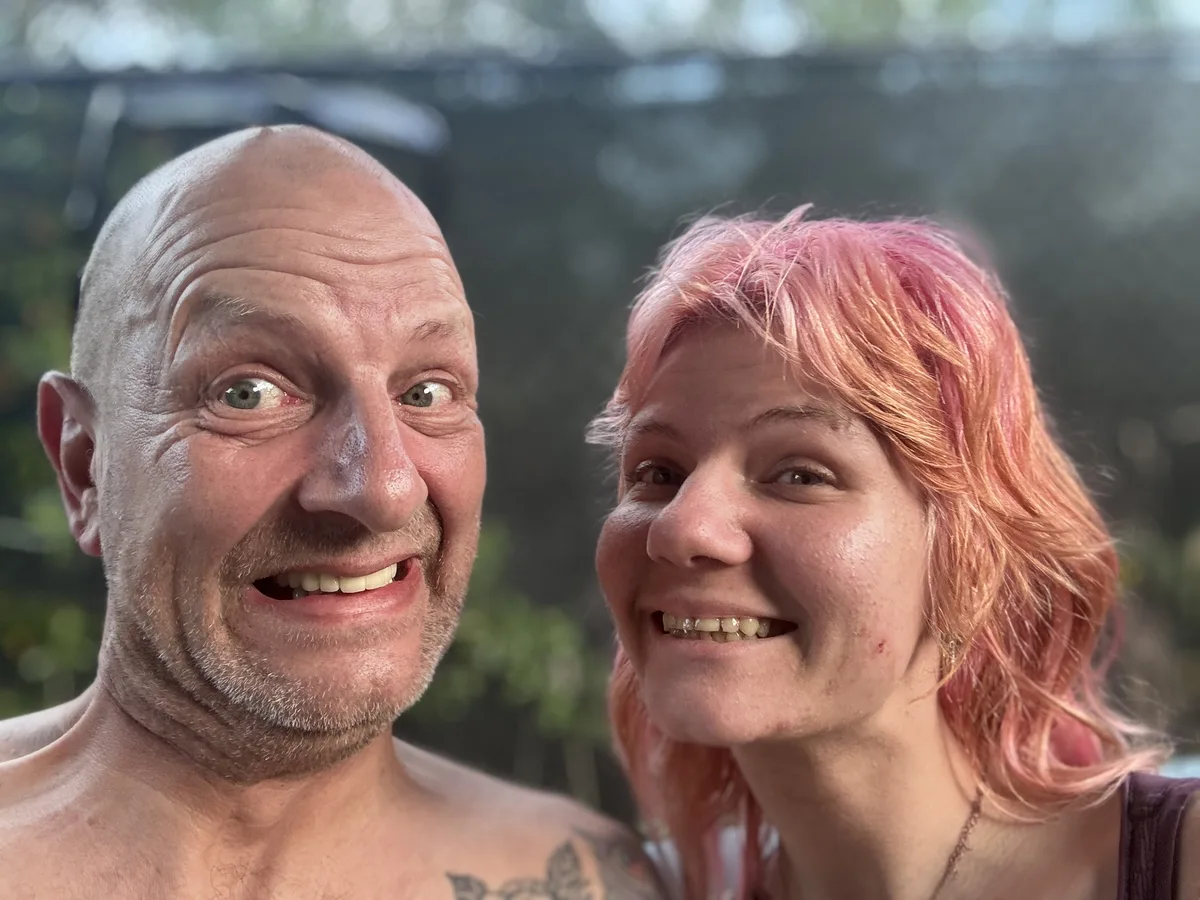
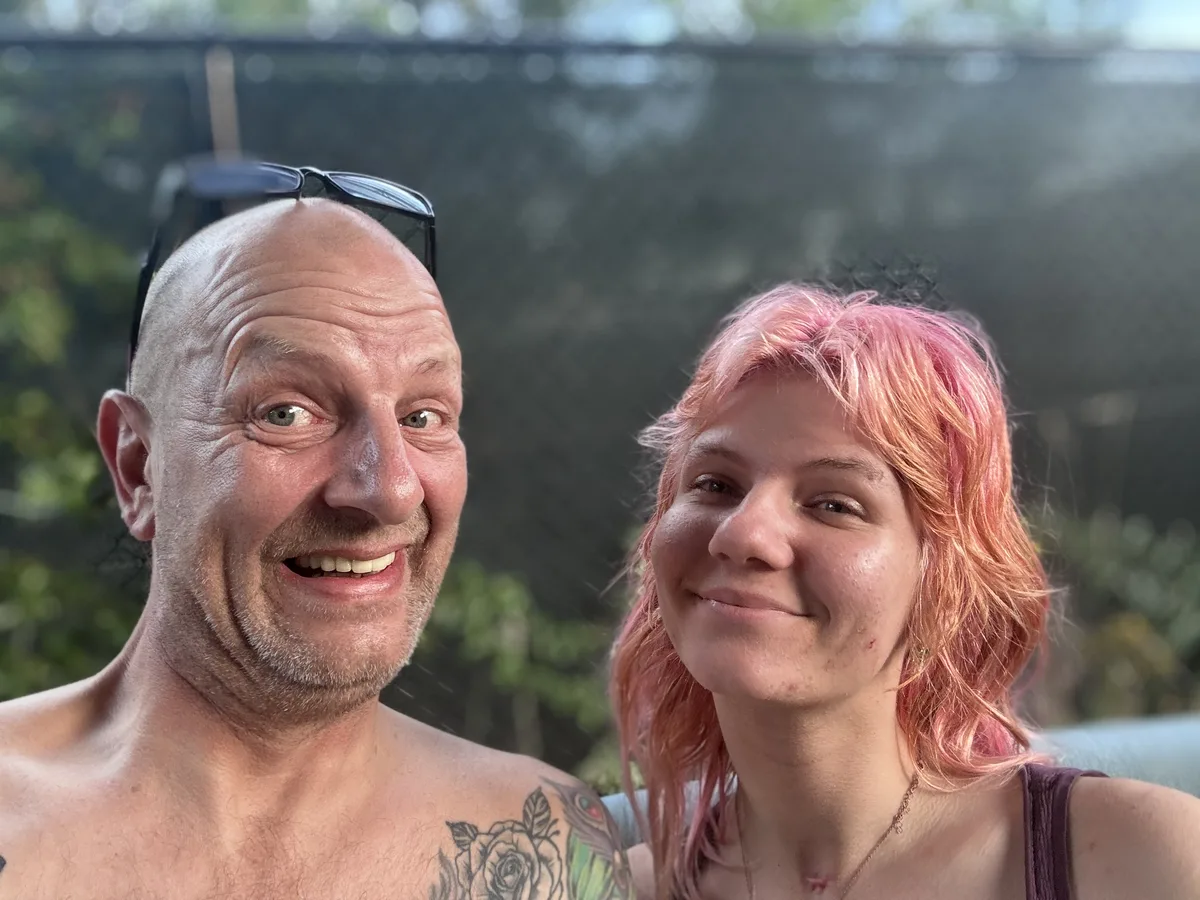
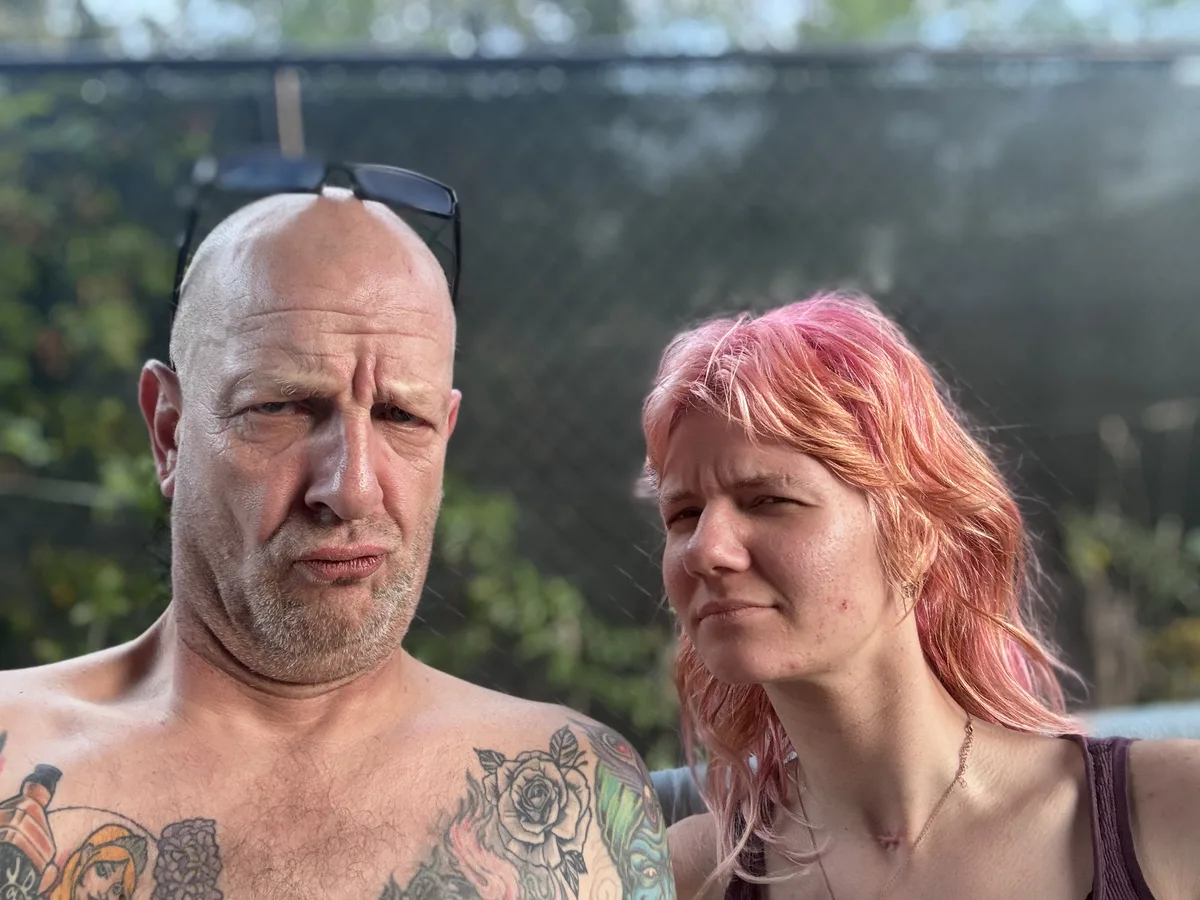
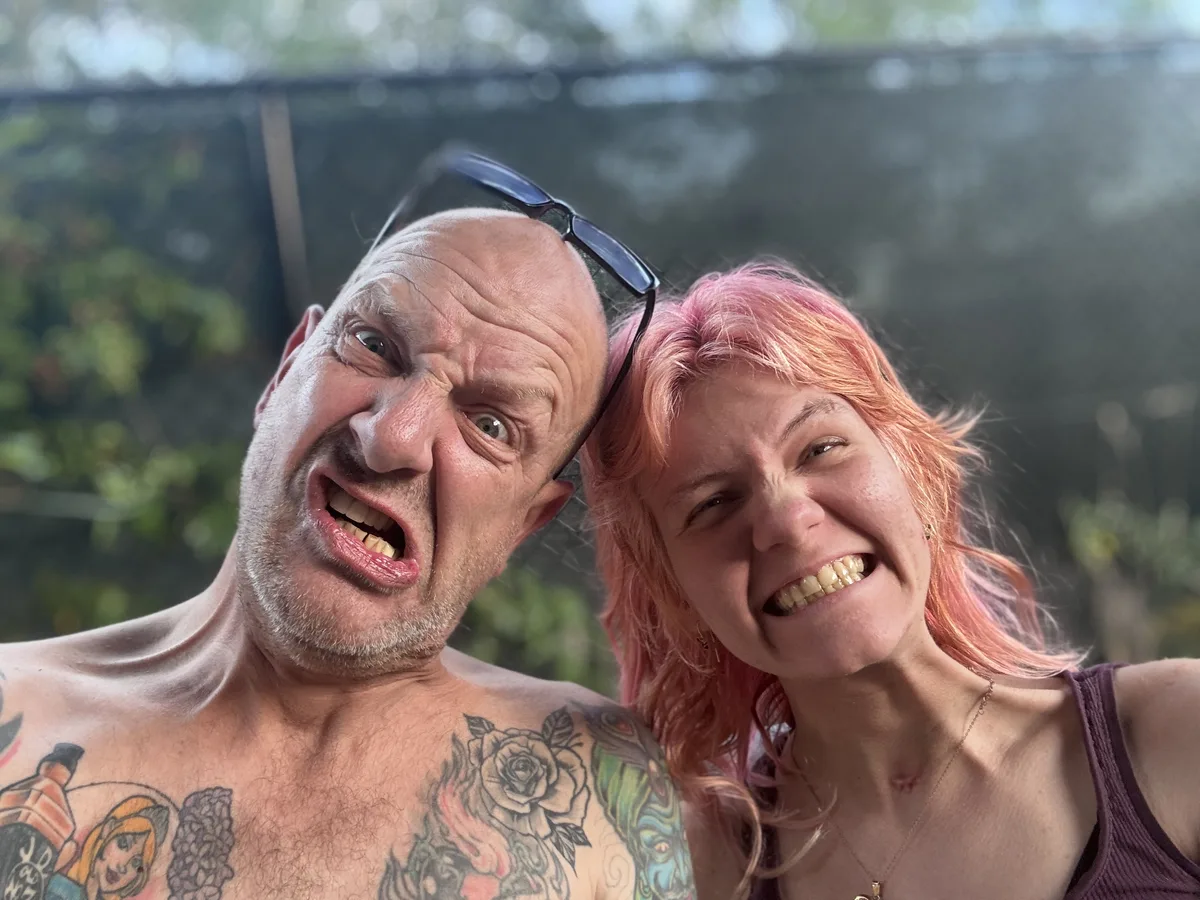
How we build it together
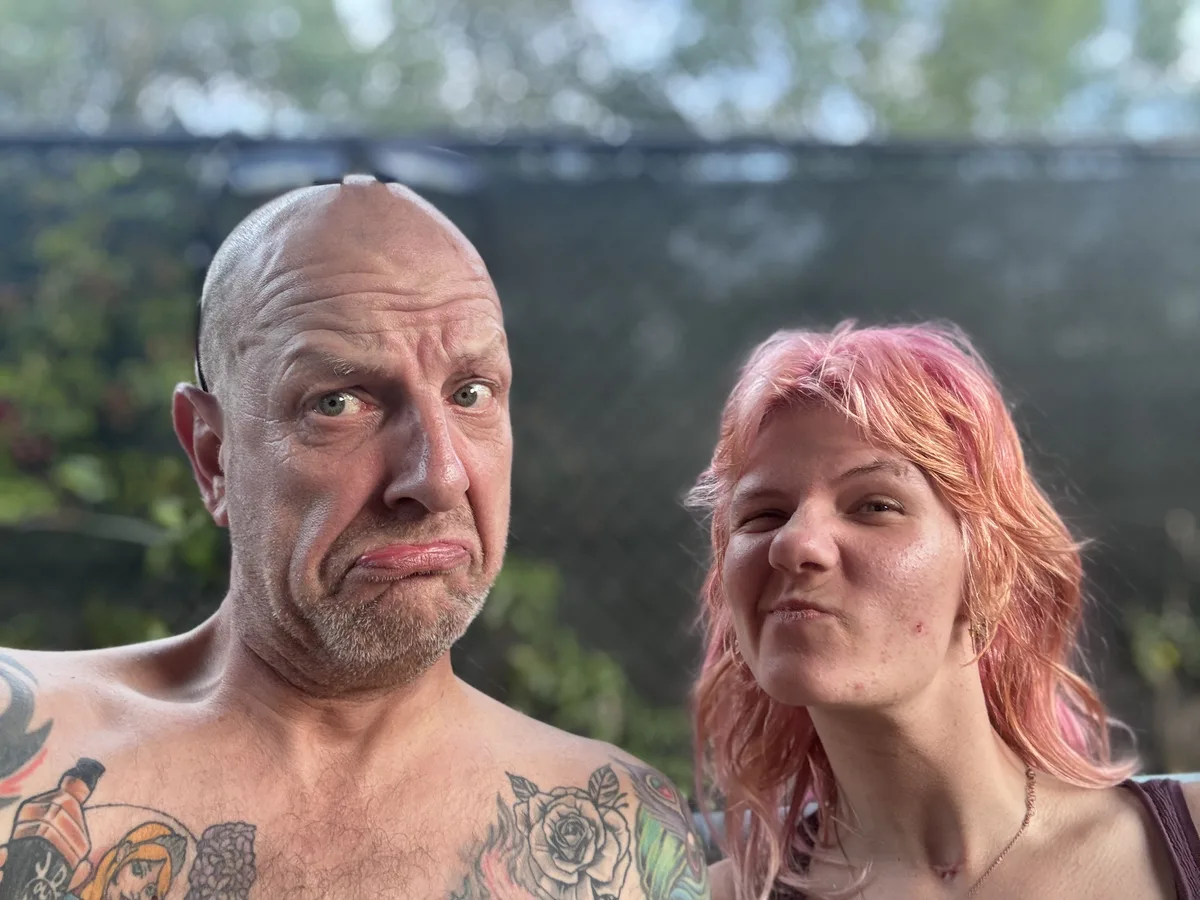
Every stage of this game starts with Sara’s answers. I ask, she decides — a room, a sound, a feeling, whatever her brain offers that day — and then I build it out loud, in the open, and bring it back to her: is this what you meant? Each design question is a small therapy session wearing a game developer’s coat. The dev-log you can read on this site is the record of both things at once: a game growing, and a maker recovering.
Over the summer that way of working sharpened into an actual method. Sara told us something simple and important: choosing between two pictures costs her nothing, while an open question — what shall we eat? — can be genuinely hard. So that’s how every decision reaches her now. She plays what exists, and right after, she judges it: two images, one tap, no words. Sessions start with judgements we know are effortless and end — sometimes — with one question of a slightly heavier kind, so the ground under her is always solid. Her choices then become real, walkable rooms, which might be the best part: seeing your own decision turn into a place.
We're careful about what this is and isn’t. It is not a medical device, and it will never diagnose — that is her care team’s work, not ours. What we are building is an evidence-based instrument: grounded in rehabilitation science, designed to show — with proof, not impressions — what works, what helps, and which ways of encouraging a recovering brain actually move the needle. That kind of insight is gathered by hand in care today, by people with too little time; tools for it are wanted. So our mission from here is simple to say and hard to do: prove what it does, and what it delivers. The method itself — honest visual questions, sessions built for success, choices that visibly become reality — is not specific to Sara. The game is the carrier; if it can carry more people than one, we’ll open it up.
The game is one front among several. Our family is building her comeback on all of them at once — the story of the others is told in De Comeback (in Dutch). This is the front where you can build along.
What the game is not
One thing we want to be clear about: the game’s story — its rooms, its silence, the figure that keeps pace in the dark — is fiction. It was written to stand on its own, and it goes places our story doesn’t go. Please don’t read it as our biography. What’s real is the making of it — and the question it started from.
What we’re inviting you to do
Let’s be precise about this part, because it matters to us: we solve our own puzzles — that’s rather the family style. What we’re inviting you to do is back the work. The hours of building, and the extra care that buys the calm in which the building happens. This is a real game, made properly, headed for the App Store — and backers get the game, and the whole story of how it was made, wrong turns included.
Follow the build, tell a friend, wishlist it when it’s up — right now, that is backing the work. If we ever open a way to put money behind it, it will be a simple pre-order, and only when there’s something worth backing in your hands — not before. And if this goes further than any of us dare to hope — if it truly succeeds — the game funds the next chapter of her rehabilitation at a specialised clinic abroad, when she’s ready for it.
She started this with one word. We’d love it if you helped us finish it.
Follow the build → Read the dev-log